



How Often Should You Do Strength Training for Results?
If you want to get stronger, you might assume the answer is simple: strength train as often as possible.
But more workouts do not automatically mean better or faster results.
For most people, strength training two to three times per week is an effective place to start. According to the CDC’s physical activity guidelines, adults should include muscle-strengthening activity for all major muscle groups at least two days per week. From there, the right frequency depends on your goals, fitness level, the type of workouts you are doing, and how well your body is recovering.
The bigger takeaway? You do not have to strength train every day to get stronger. A consistent routine that challenges your muscles and gives your body time to recover can go a long way.
How Many Days a Week Should You Strength Train?
There is no perfect number that works for everyone, but two to three days per week is a realistic strength-training schedule for many people.
Here is what that can look like:
| Strength Training Frequency | What to Know |
|---|---|
| 2 days per week | A great starting point for beginners, busy schedules, or anyone building a consistent routine |
| 3 days per week | Allows for more training while still leaving plenty of room for recovery |
| 4+ days per week | Can work for more experienced exercisers when workouts are intentionally programmed and recovery is prioritized |
What matters most is not simply how many days you work out. It is what you are doing during those workouts and whether you can maintain the routine consistently.
Two thoughtful, full-body strength workouts every week can be far more effective than committing to five days, feeling overwhelmed, and giving up after a few weeks.
Is Strength Training Twice a Week Enough?
Yes. Strength training twice a week can absolutely be enough to make meaningful progress, especially if you are a beginner or returning to exercise after time away.
The CDC recommends muscle-strengthening activity that works the major muscle groups at least two days per week. That includes your legs, hips, back, abdomen, chest, shoulders, and arms.
The key is making those workouts count.
Strength training works by challenging your muscles beyond what they are accustomed to. Over time, your body adapts to that challenge. As you get stronger, continuing to progress may mean increasing resistance, adding repetitions, improving your control or range of motion, or taking on a new variation.
If you only have two days available, full-body workouts can be an efficient way to make sure you are consistently challenging your major muscle groups.
You do not necessarily need another workout day. Sometimes, you simply need to continue challenging yourself within the workouts you are already doing.
Is Strength Training Three Times a Week Better?
It can be, but “more” and “better” are not always the same thing.
Three strength workouts per week can give you another opportunity to practice movements, challenge your muscles, and build strength. It may also make sense if strength is one of your primary fitness goals.
But the third workout only helps if your body has the opportunity to recover from the first two.
If adding another day leaves you constantly exhausted, unusually sore, or dreading your workouts, it may not be helping you move toward your goals.
Your workout schedule should fit your life and your body, not the other way around.

How Long Should a Strength Training Workout Be?
You do not need to spend hours strength training for a workout to count.
Mayo Clinic notes that strength training does not need to take hours and that shorter, focused sessions can still be effective. But there is no single workout length that works for everyone. How long you need depends on what you are doing, how many muscle groups you are working, your fitness level, and the intensity of your workout.
So, is 20 or 30 minutes of strength training enough? It can be. A focused workout that appropriately challenges your muscles can be valuable even when you do not have an hour to exercise.
A shorter, intentional workout can accomplish more than a longer workout filled with long breaks or movements that are no longer challenging you.
Instead of watching the clock as your only measure of a good workout, focus on whether you are challenging your muscles appropriately and whether the routine is realistic enough to maintain consistently.
How Often Should Women Strength Train?
For most women, two to three strength-training sessions per week can be an effective and sustainable goal.
Women do not need a completely different rule book when it comes to strength-training frequency. Your ideal routine depends much more on your experience, goals, workout intensity, other physical activity, and recovery.
And strength training does not have to mean spending hours lifting heavy weights in a traditional gym.
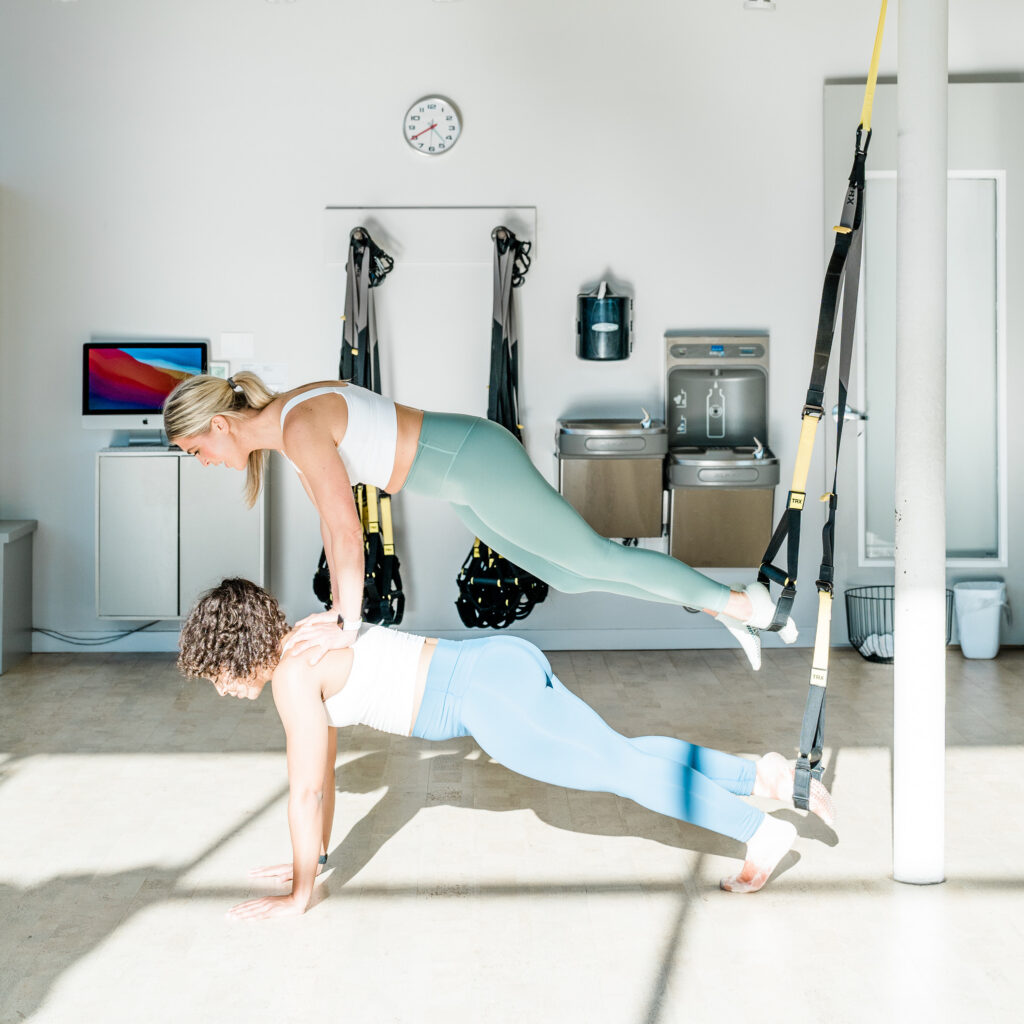
Body weight exercises, resistance bands, free weights, TRX exercises, and other forms of resistance can all challenge your muscles. Even low-impact workouts can incorporate meaningful strength training when the muscles are being appropriately challenged.
That is important because “low impact” describes the stress a movement places on your joints. It does not mean the workout is easy or ineffective. True40 goes deeper into this in Why Low Impact Workout Doesn’t Mean Low Impact Results.
Can You Strength Train Every Day?
You can structure a fitness program that includes strength work on multiple consecutive days, but most people do not need to strength train every day to see results.
Strength training five days a week is not automatically too much, just as two or three days is not automatically too little. What matters is how those workouts are structured. Someone training five days may alternate muscle groups or vary workout intensity so the same muscles are not being challenged hard every day.
If you are doing challenging full-body strength workouts, recovery between sessions becomes especially important.
Instead of asking, “How many days can I fit in?” it can be more helpful to ask:
How often can I strength train while still feeling strong, recovered, and ready for my next workout?
Your body is giving you information, too. Paying attention to persistent soreness, fatigue, changes in performance, and how you feel going into a workout can help you recognize when recovery needs more space in your routine.

Why Rest Days Matter for Strength Training Results
Rest is not the opposite of progress.
Strength training creates a challenge your body has to adapt to. Recovery gives your muscles time to repair and adapt to that training.
That does not mean every non-strength day needs to be spent on the couch. Depending on how you feel, walking, stretching, mobility work, or other forms of lighter movement can all have a place in your week. True40’s guide to listening to your body and recovering well with rest days goes deeper into the role recovery can play in a fitness routine.
It simply means you do not have to push the same muscles as hard as possible every single day to make progress.
At True40, we believe movement should help you feel more connected to your body. That includes learning when you are ready for a challenge and when your body may benefit from something different.
How Long Does It Take to See Results From Strength Training?
There is no single timeline because “results” can mean a lot of different things.
You might notice that an exercise feels easier. Maybe you can use a heavier weight, hold a position longer, complete another repetition, or move through an exercise with better control.
You may notice everyday changes, too. Carrying groceries feels easier. You feel more stable. You have more confidence trying movements that once felt intimidating.
Visible changes in muscle definition or body composition may take longer and can be influenced by many factors, including your starting point, genetics, nutrition, sleep, stress, and overall activity.
Instead of using appearance as your only measure of progress, pay attention to what your body can do.
Getting stronger is a result.
What Matters Besides How Often You Strength Train?
Frequency matters, but it is only one part of the equation.
Consistency
The best workout schedule is one you can actually maintain.
A realistic two-day routine followed consistently will usually serve you better than an ambitious schedule that does not fit your life.
Progressive Challenge
As your body adapts, it needs an appropriate new challenge to continue progressing.
That could mean using more resistance, adding repetitions, improving control, increasing range of motion, or trying a more challenging variation.
Full-Body Training
A balanced routine should strengthen the major muscle groups rather than repeatedly focusing on only one area.
True40’s Fusion Class is one example of a full-body approach that combines low-impact strength training with barre, Pilates, yoga, cardio, and functional resistance training.
Recovery
Sleep, rest, stress, nutrition, and your overall activity level can all influence how you feel and perform during your workouts.
Enjoyment
This one matters more than people sometimes give it credit for.
If you hate your workout, staying consistent becomes much harder.
Finding movement you genuinely enjoy can make fitness feel less like another obligation on your calendar and more like something you look forward to doing.

Does Low-Impact Strength Training Still Work?
Absolutely. A workout does not have to include jumping, running, or other high-impact movements to build strength.
Low-impact strength training can use free weights, body weight exercises, resistance, controlled movements, isometric holds, and other techniques to challenge your muscles while placing less impact on your joints.
That is one reason low-impact workouts can work well for people at many different fitness levels and stages of life.
At True40, the True40 workout combines strength training with barre, Pilates, yoga, cardio, and functional movement in a high-intensity, low-impact workout. Classes include modifications and optional challenges, so you can adjust the workout to meet your body where it is that day.
You are still building strength. You are simply doing it without relying on high-impact movement.
If barre is part of your routine, you can also learn more about the benefits of barre for strength, posture, and flexibility.
What Does a Good Weekly Strength Training Schedule Look Like?
If you are new to strength training, your schedule does not have to be complicated.
You might begin with two full-body workouts each week with recovery or other movement in between.
Or, if three workouts feel good for your body and schedule:
Monday: Strength
Wednesday: Strength
Saturday: Strength
| Monday | Full-body strength workout |
| Tuesday | Walk or lighter movement |
| Wednesday | Rest or mobility |
| Thursday | Full-body strength workout |
| Friday | Walk or lighter movement |
| Saturday | Movement you enjoy |
| Sunday | Rest |
These are examples, not rules.
Your week may look completely different, and that is okay. Work schedules, family responsibilities, energy levels, other activities, and fitness goals all matter.
The goal is not to create the “perfect” fitness schedule. It is to create one you can return to week after week.
How True40 Helps You Build Strength Without Living at the Gym
Strength training can get complicated quickly when you start searching online.
How many sets? How many reps? Heavy weights or light weights? Two days or four? Cardio before or after? Are you doing enough?
It does not have to feel that overwhelming.
True40’s signature Fusion Class combines strength training, cardio, barre, Pilates, and yoga into one balanced, full-body workout. Classes use equipment such as TRX straps, Pilates balls, free weights, gliders, and yoga straps, with instructors offering both modifications and challenges throughout class.
That means you can walk into the studio without having to build your own workout plan first.
You can challenge yourself while still moving true to your body.
And because the method is low impact, you do not have to choose between a workout that feels sustainable and one that helps you build strength.
Want to see what a class actually includes? Explore the True40 workout and class formats.

So, How Often Should You Strength Train?
For most people, two to three strength-training sessions per week is a great place to start.
Two days can be enough to build strength and establish a consistent routine. Three days may make sense as your goals or experience change. More frequent training can work, too, but it requires more attention to how your workouts are structured and how well you are recovering.
You do not need to strength train every day.
You do not need the most complicated workout plan.
And you do not need to punish your body to make progress.
Find a routine that challenges you, gives you room to recover, and feels realistic enough to keep coming back to.
That is where results have a chance to become lasting ones.
Ready to find a strength-training routine you actually look forward to? Find your nearest True40 Studio and try a class.
Frequently Asked Questions
How many days a week should you strength train?
For most people, two to three days of strength training per week is a practical target. Current physical activity guidelines recommend muscle-strengthening activity involving all major muscle groups on at least two days per week.
Is strength training twice a week enough?
Yes. Two well-designed strength workouts per week can be enough to make meaningful progress, particularly for beginners and people building a consistent routine.
Is 20 to 30 minutes of strength training enough?
It can be. Workout quality, intensity, exercises, fitness level, and overall weekly routine matter in addition to the number of minutes spent exercising. A shorter, focused strength workout can still provide a meaningful challenge.
Is three days a week enough to build muscle?
Three strength-training sessions per week can support muscle growth when your workouts provide enough resistance and progressive challenge and you are giving your body adequate nutrition and recovery.
How often should beginners strength train?
Two days per week is a manageable starting point for many beginners. You can increase your frequency over time depending on your goals, fitness level, schedule, and recovery.
Is strength training five days a week too much?
Not necessarily. Five strength-training days may work for someone whose program varies muscle groups and intensity and includes adequate recovery. Most people, however, do not need to strength train five days per week to make progress.
Can you strength train every day?
It is possible to strength train on consecutive days when a program varies the muscles being worked or the intensity of the sessions. However, most people do not need to strength train every day to make progress.
Does low-impact strength training build muscle?
Low-impact exercise can build strength and muscle when it provides enough resistance and challenge to the muscles. Low impact refers to the amount of impact placed on the joints, not how effective the workout is.
Want more from True40 Fitness in your Google results?
Add us as a preferred source to continue getting more updates.